

Top Tips to Create a Home That Feels Collected, Not Decorated
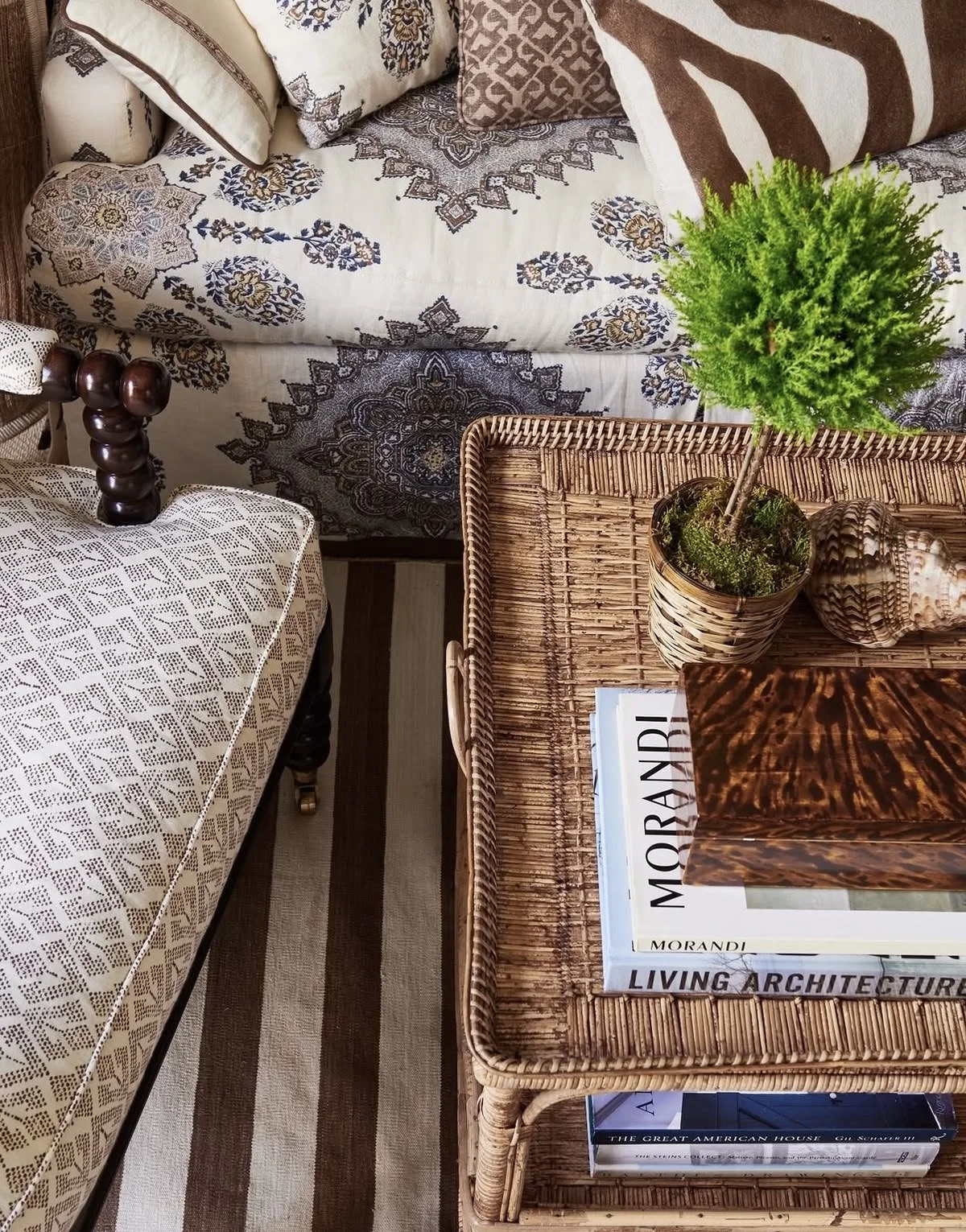
Image: Via Pinterest, Source Unknown
There are some homes that just feel good the moment you walk through the door. They may be beautifully designed, but they never feel overly styled or pretentious. They feel like a warm hug, a crisp fall afternoon, the evening sun in late summer... they feel like home.
When you look around, you see pieces that feel like they've been there forever, as though perhaps the piece itself was made for this exact spot (and perhaps maybe it was). The art is beautiful, but personal. The finishes aren't perfectly matched, yet somehow they're perfect together. There might be an old table with a few scratches, a stack of well-loved books, or something a little unexpected tucked into a corner or up on a shelf.
The room feels designed and beautiful, but oh so cozy.
This is what I mean when I talk about a home feeling collected rather than decorated. And despite what a perfectly styled room on Instagram might have you believe, creating that feeling doesn't require a house full of expensive, luxury pieces or a lifetime spent collecting beautiful things. It's simply about allowing yourself to design your space in a way that feels authentically you, with a thoughtful approach to help guide the process.
Start With a Feeling, Not a Shopping List
One of the easiest mistakes I see homeowners make over and over again when designing a room is jumping straight into shopping (or worse, a renovation) without a solid vision.
I get it. It feels straightforward. You need a sofa, two chairs, a coffee table, a rug and a lamp, so naturally, you start looking for a sofa, two chairs, a coffee table, a rug and a lamp. But before selecting individual pieces or materials for a space, it's crucial to take a step back and establish how the room should feel.
Should it feel relaxed and comfortable? Warm and enveloping? Light and airy? Tailored but inviting? A little moody? Maybe there are certain places, memories or styles of architecture you keep coming back to.
This larger idea becomes a filter for everything that follows.
It's why, when working with clients, I always start by creating a concept and establishing an overall design direction before we even begin thinking about specific colors or materials. When you understand the feeling you're trying to create, you're far less likely to end up with a room full of individually beautiful things that don't quite make sense together.
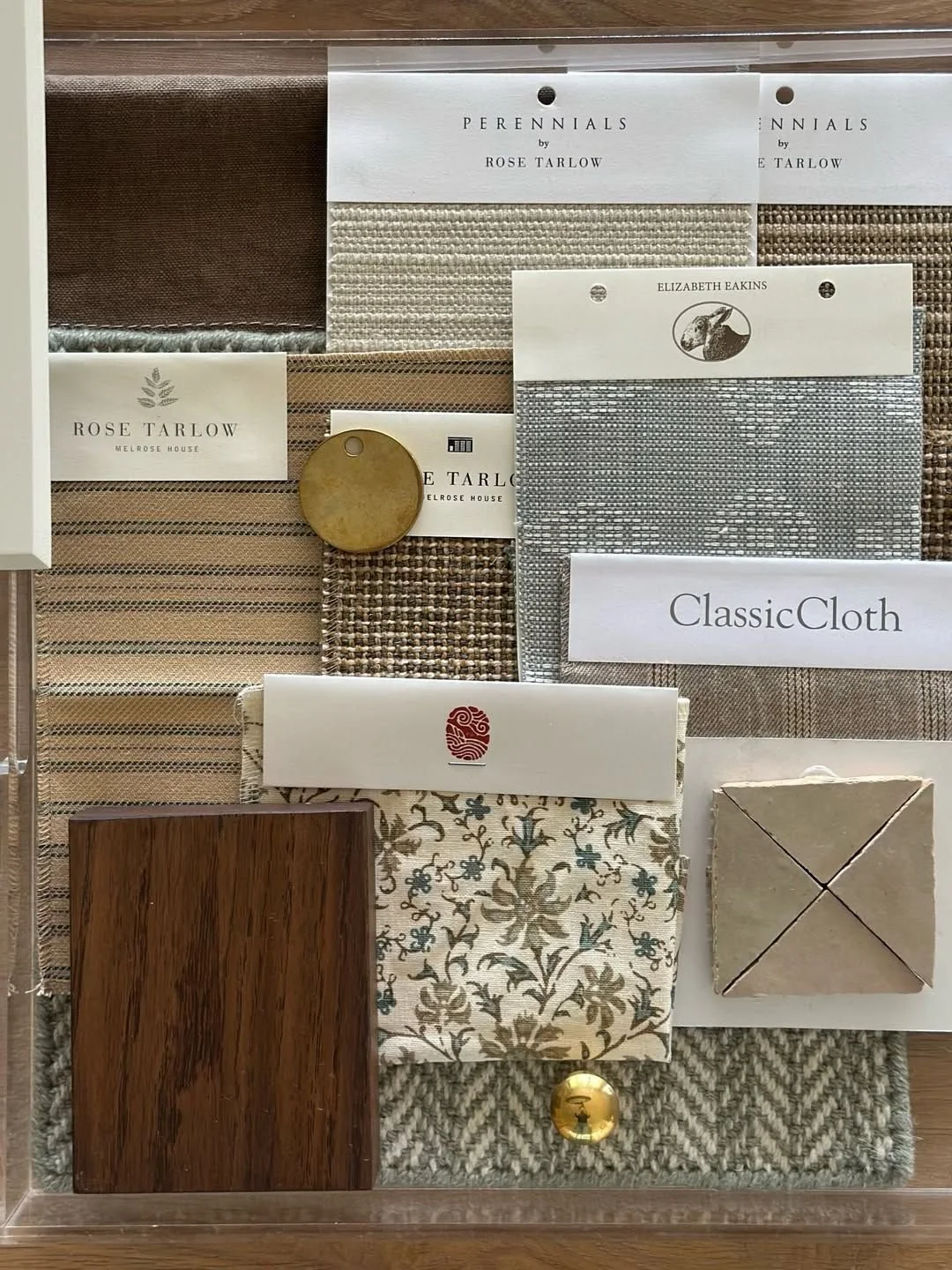
Image Via: Marika Olson Interiors
Designer Tip: Before you buy anything for a room, save 10–15 images you love without thinking too hard about why. Then look at them all together. What keeps repeating in the images you collected? Pay attention to materials, shapes, contrast, color, architecture and even how the rooms make you feel. Those patterns are often much more useful than trying to name your exact “design style.”
Don't Buy the Room All at Once
There is nothing wrong with buying new furniture. In fact, most rooms need plenty of it.
The problem comes when every piece is purchased at the same time, from the same collection or from the same store. Suddenly the sofa, chairs, tables and accessories all start to look relatively similar, and worse yet, the you in your space gets lost.
Varying your sources (and the type of source) is one of the easiest ways to avoid this.
Maybe the sofa comes from a larger retailer, the coffee table is vintage, the side table is something you've owned for years and the lamp is the piece you decided was worth splurging on. Your rug might be new, while the art above the sofa came from an antique shop.
You can mix price points, too. One of my favorite ways to give a room a big wow factor is to pair an investment piece with an incredible thrift find (or two or three).
The goal isn't for someone to walk into your space and immediately be able to guess where everything came from or what it cost. It's for each piece to feel as though it found its way into the room for a reason, almost as though it's been there forever.
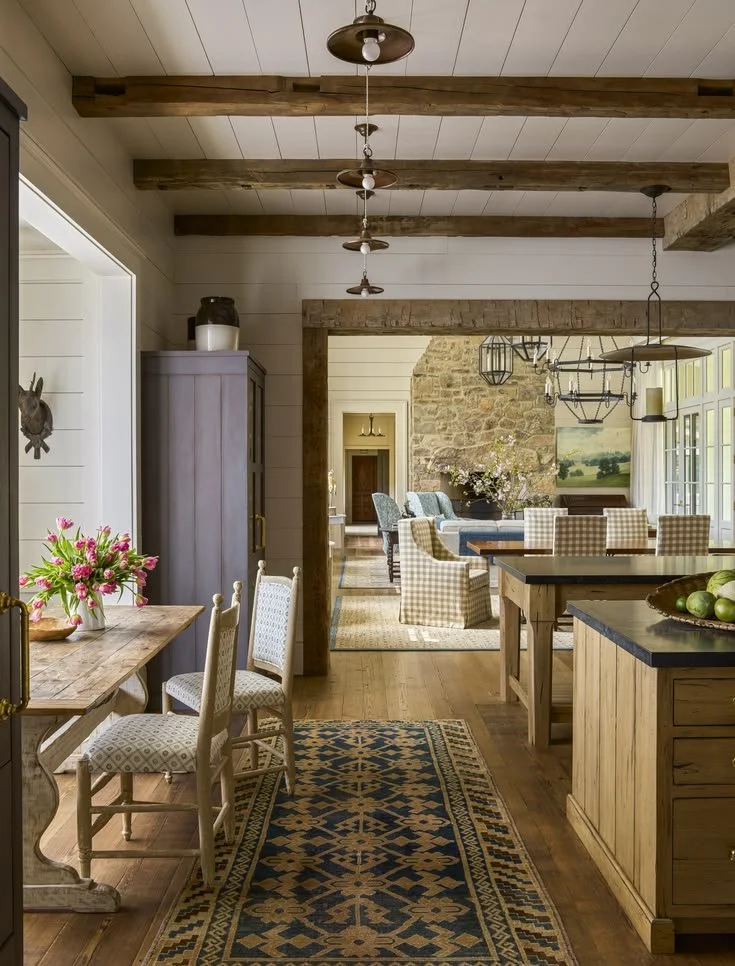
Image Via: Westbrook Interiors
Mix Something Old With Something New
If a room filled entirely with new furniture is feeling a little flat, something old is often what's missing.
Vintage and antique pieces bring qualities that are difficult, dare I say impossible, to manufacture: patina, irregularity, age and a sense of history. Even one older piece can keep a room full of new furnishings from feeling too perfect. And you don't have to become an antique collector to do this well. Facebook Marketplace can be your best friend here if you have a little patience. An old wood stool beside a bathtub, a vintage chest used as a nightstand, an antique landscape tucked into a gallery wall or a small brass object on a bookshelf can be enough.
The contrast is what makes it interesting. Rugged and pristine. Old and new. It's that little bit of tension that gives a space depth and can make it feel much more elevated. I especially love using older pieces in rooms where many of the larger elements need to be new. A comfortable new sofa makes perfect sense for the way a family lives today. But pairing it with an antique table or vintage art gives the room a little soul without sacrificing function.
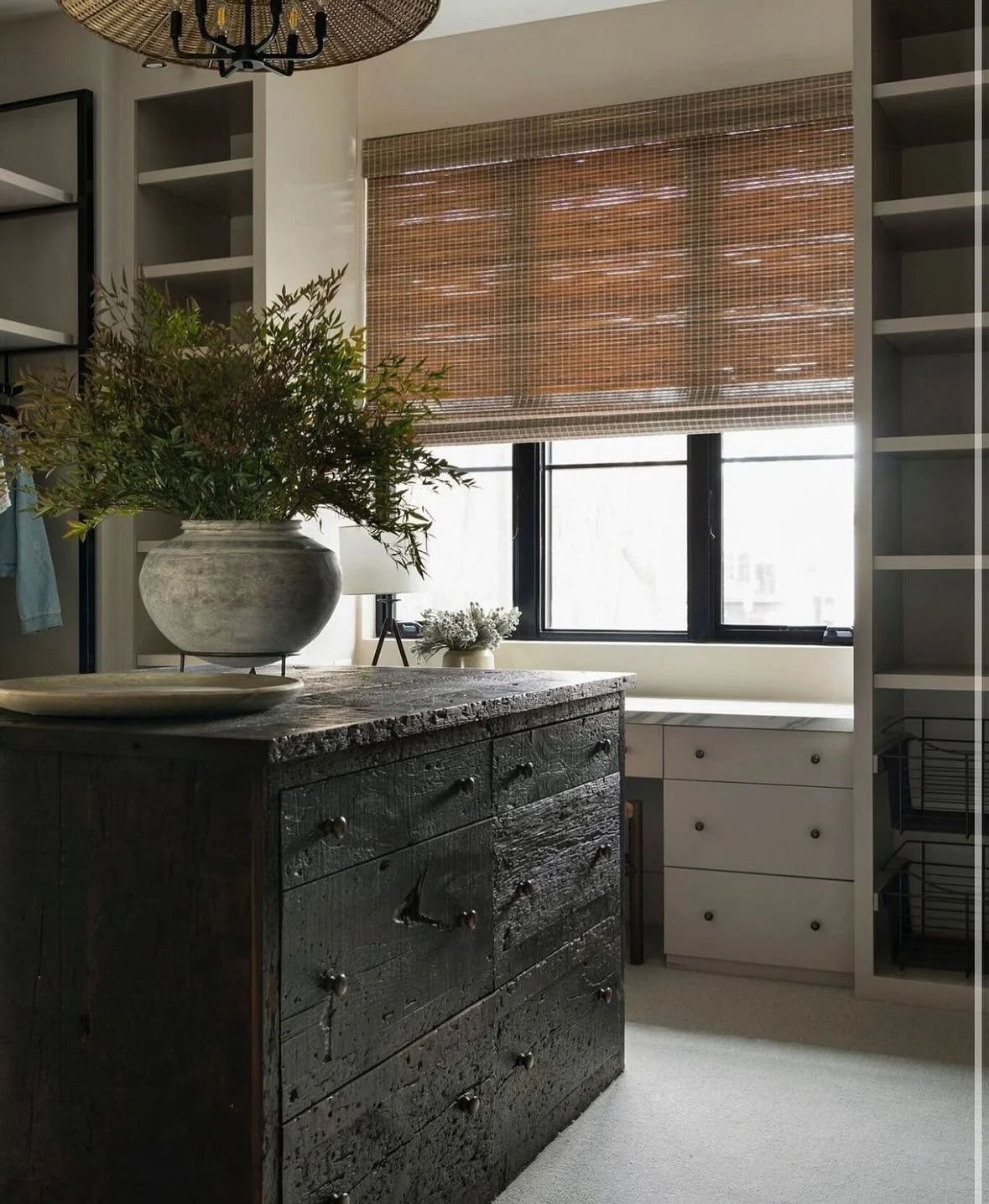
Image Via: Pinterest, Source Unknown
Let Natural Materials Bring Character
Another way to create depth is through materials.
Real wood has grain and variation. Stone has veining and movement. Linen wrinkles. Brass changes with age. Wool has texture. Leather softens over time. Those little imperfections are part of what makes a room feel alive. This is also why I don't think every wood tone or metal finish in a room needs to match perfectly. In fact, when everything matches too closely, you can actually lose some of the depth you're trying to create.
Instead, look for relationships between materials. A warm walnut cabinet doesn't require every other piece of wood in the room to be walnut. A lighter oak or painted piece might provide exactly the contrast it needs to really shine.
The same principle applies to metals. Your cabinet hardware, lighting and plumbing fixtures don't necessarily have to be identical as long as the finishes feel intentional together. Think coordination, not duplication. Which leads me to my next tip.
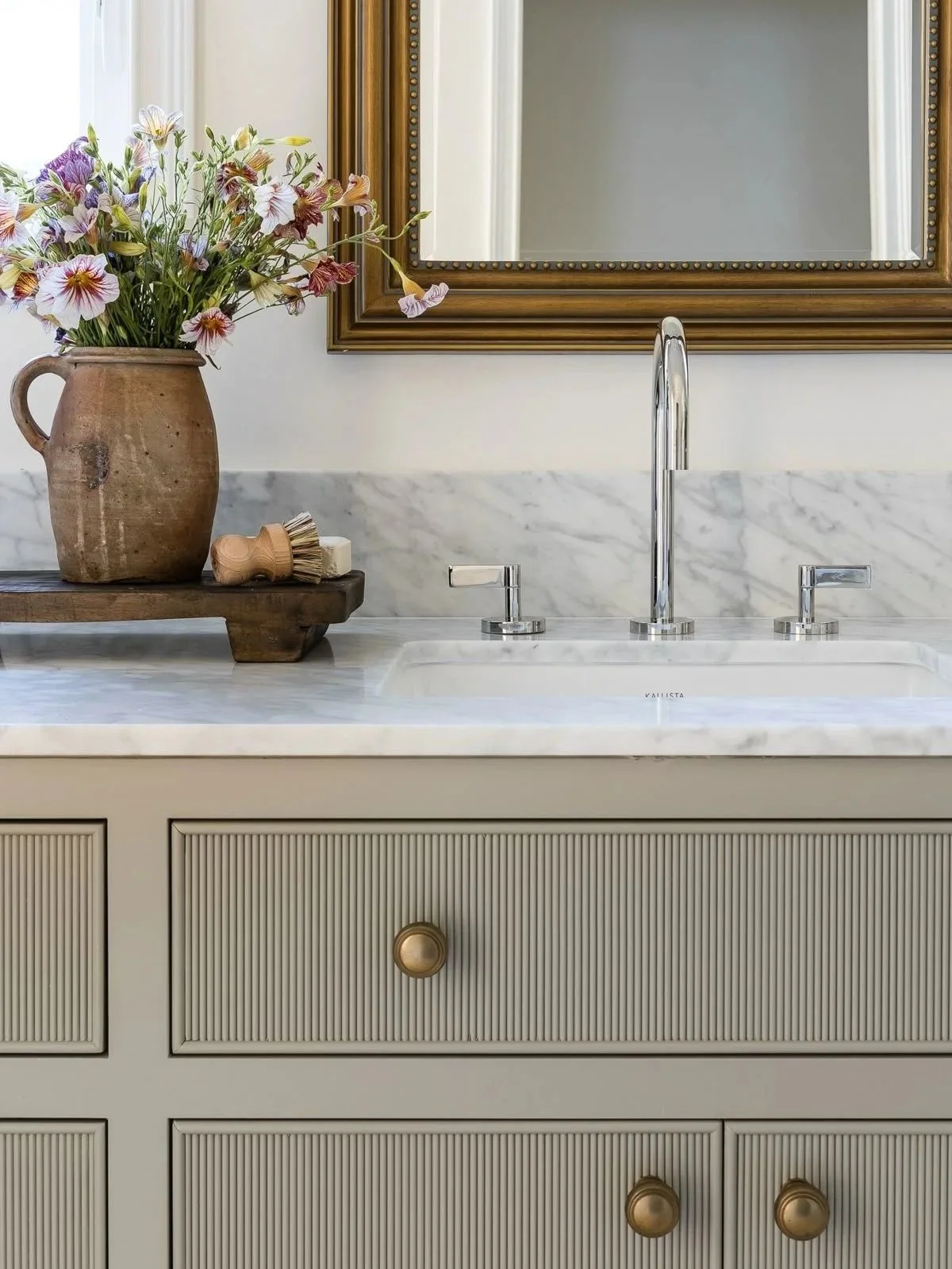
Image Via: Mindy Gayer
Stop Making Everything Match
This is, without a doubt, one of the biggest differences between a well designed space and one that feels like an afterthought.
Your bed and nightstands don't have to match. Your sofa and chairs don't need to come from the same collection or be the same color. Every table doesn't need the same wood finish. And please, please... your furniture should never arrive as a matching suite. I am giving you permission to mix it up! Put that brass light fixture you love with your black cabinet hardware! Get those vintage nightstands you love and pair it with your contemporary bed frame! Let your freak flag fly! After all, it is your home.
In the game of mixing, it’s all about balance. If you have a visually heavy sofa, perhaps the chairs should have a lighter frame. If your bed has a soft upholstered silhouette, a wood nightstand might provide needed contrast. If one side table is antique, the other could be something simple and contemporary with a similar visual weight. There should be enough repetition for the room to feel cohesive, but enough variation for it to feel interesting.
It's truly an art form to create a cohesive, balanced space that's still full of depth. If it were easy, I wouldn't have a job. But the more you give yourself the freedom to experiment with pairing things together in interesting ways, even if it doesn't always work out, the better you'll get at recognizing what does.
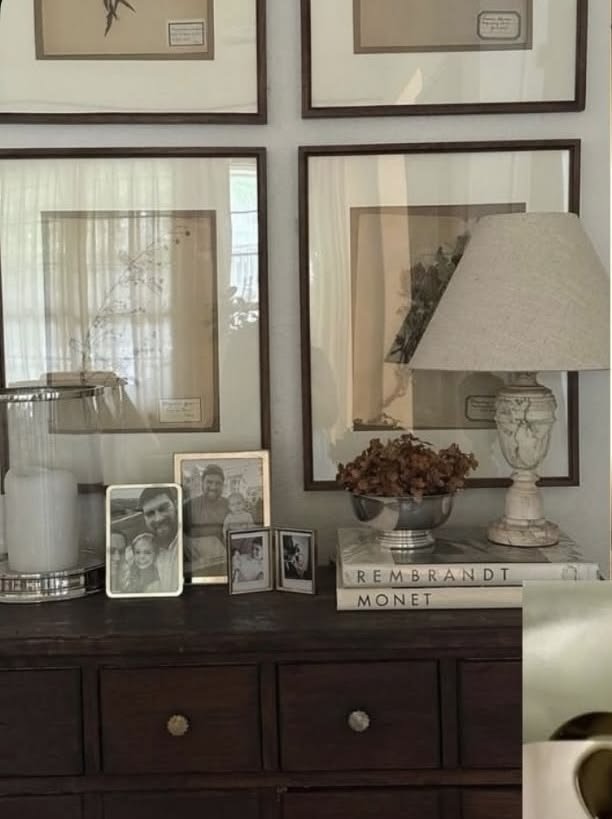
Image Via: Pinterest, Source Unknown
Make Room for the Things That Mean Something
A beautifully designed home should still tell you something about the people who live there. In fact, a beautifully designed home should scream everything about you.
This is one of my biggest pet peeves with a lot of modern homes: everything looks the same! I call this the ‘sameness’ problem. Social media has created a flattening of character and personality in interior design. I should be able to walk into your home and immediately pick up on your energy. I should feel at least some of the warmth, love and joy that make up your life in the space you spend the most of your time.
Maybe it's artwork you found while traveling. A piece of furniture that belonged to your grandparents. Your children's artwork hanging on the walls. A stack of books you've actually read. Family photographs. These are the things that make a room memorable. I believe it’s so important to remember that not everything in your home needs to be impressive. It just needs to earn its place in some way, whether that's because it's useful, beautiful, sentimental or simply makes you happy.
Sometimes those deeply personal pieces are exactly what keeps even a professionally designed room from feeling flat.
Give Your Home Permission to Evolve
This might be the hardest part of creating a collected home: accepting that it might not be finished right away. Or this year. Or even next year. There is so much pressure when decorating to fill every empty wall, style every surface and check every item off the list. But an empty corner isn't an emergency.
Sometimes (or really, most of the time) it's better to wait for the right piece to come to you rather than buy something you don't really love simply because the room feels unfinished. Design the foundation well. Invest in the pieces that matter. Solve the functional problems. Then allow some of the smaller layers to happen naturally.
Your home will change as you do. You'll travel, you'll find art, you'll move furniture around. Something you bought for one room will unexpectedly be perfect in another. That's part of what makes a home feel collected in the first place. And it’s why I always say it’s important to enjoy the journey of creating your space, as much as the destination.
A Home Should Feel Like You
There isn't a formula for creating the ‘perfect’ home, and I think that's precisely the point. The goal isn't, and shouldn’t be, to recreate someone else's beautiful room piece by piece. It’s to understand what you truly love and be willing to throw everything else out the window.
Mix the old with the new. Let materials vary. Buy from different places. Keep the things that mean something, even if social media deems them outdated. Resist the urge to match everything. And don't be afraid to leave a little room for what you haven't found yet.
Because ultimately, the most interesting homes aren't the ones where every detail is perfect.
They're the ones that feel like they couldn't belong to anyone else.
You Don’t Have to Figure It All Out Alone
Whether you need a little expert guidance or a partner to help bring the whole thing together, Murphy Lane Interiors offers thoughtful design support tailored to you, your home, and the way you want to live.
Explore Design ServicesSHOP THE MURPHY LANE EDIT
A few things I’m loving right now.
A curated collection of furniture, lighting, textiles, and small details for creating a home that feels collected, personal, and entirely your own.